
Unitech Shyre

Automated FPI with Integrated Ultrasonic Cleaning

Automated fluorescent penetrant inspection lines that bring cleaning, penetrant application, rinse, drying and developer into one controlled, fully recorded sequence.

The reliability of an FPI result is determined less by the chemistry than by how precisely the process is controlled and how completely it is recorded. Unitech Shyre automated FPI lines hold every stage, from pre-clean through penetrant, wash, drying and developer, to identical parameters part after part, with more than 30 years of FPI and precision cleaning experience behind every line. Cleaning is built into the same automated sequence, because the surface presented to the penetrant decides whether everything after it can be trusted.
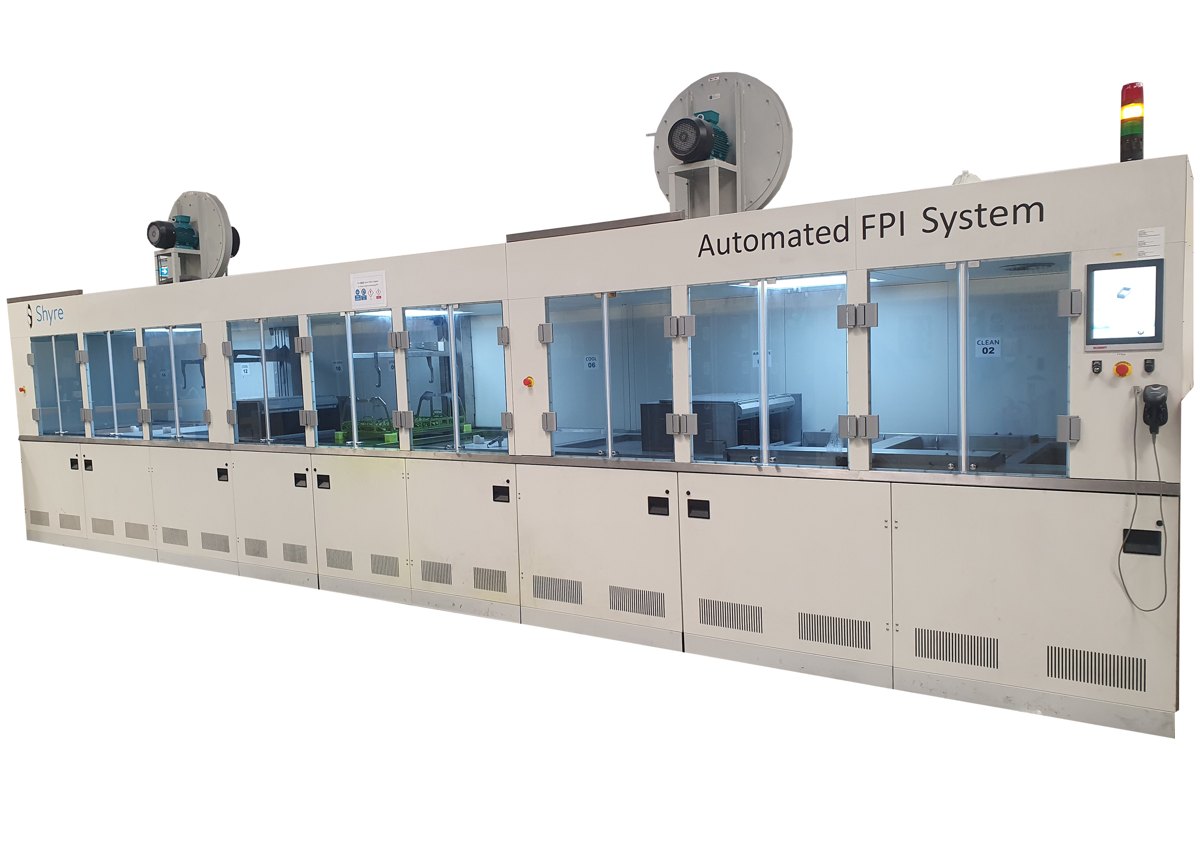
Unitech Shyre automated FPI system, full line with background removed

Every stage under control

Penetrant inspection is a sequence of interdependent stages, each governed by parameters that must be held within defined limits: part temperature at penetrant entry, dwell and drain times, wash water pressure and temperature, drying temperature and time, and developer type and dwell. Robotics, conveyors and programmable control govern part transfer, timing, temperature and rinse pressure so every component reaches the inspection booth prepared to the same controlled conditions, viewed under controlled ultraviolet irradiance and low ambient white light.

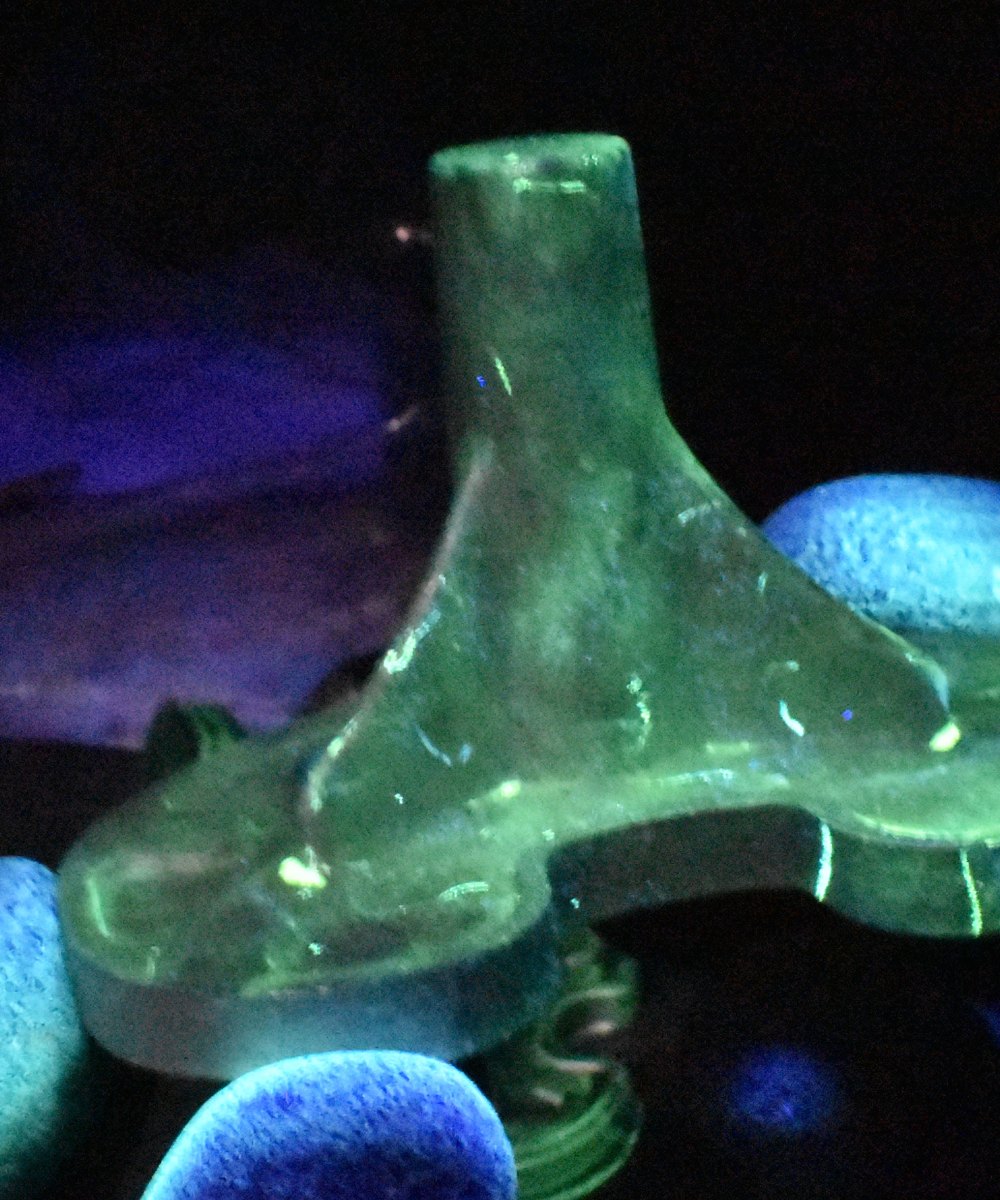
Orthopaedic component under ultraviolet light during fluorescent penetrant inspection

Validation and traceability

Each critical variable is monitored continuously and logged against the part or batch, producing objective evidence of how every component was processed. That record underpins formal process validation, with IQ, OQ and PQ services available, and supports the audit regimes that govern the sector, from Nadcap in aerospace to the quality systems required in medical manufacture, where penetrant systems are qualified to AMS 2644 and the process is conducted to ASTM E1417 or ISO 3452. The same data integrates into wider Industry 4.0 environments for trend analysis and statistical process control.

Options

Applications

Surface-defect inspection of critical castings and machined components across aerospace, automotive, medical and orthopaedic, and metal finishing production, including titanium, cobalt-chrome and stainless steel implants where ASTM F601 applies.

Specification

Process stagesPre-clean, penetrant application, wash, drying, developer application and inspection booth, in one automated sequence
StandardsProcess designed to maintain ASTM E1417 and ISO 3452 requirements; penetrant systems qualified to AMS 2644; ASTM F601 addressed for surgical implants
System levelsLevel 2 and Level 3 systems
CleaningIntegrated ultrasonic pre-cleaning within the same automated line
ControlRobotics, conveyors and programmable control of part transfer, timing, temperature and rinse pressure
InspectionUV-A viewing under controlled irradiance with low ambient white light
DataContinuous monitoring of critical variables; per-part and per-batch logging and reporting
ValidationIQ, OQ and PQ validation services; records support Nadcap and medical audit regimes
OptionsCustom tooling design; water treatment; inspection lights and enclosures; data capture and reporting; validation expertise
SpecificationAgreed per configuration; full technical specification issued with each proposal

Discuss an FPI line for your inspection requirement

Tell us your parts, standards and throughput, and we will propose the right FPI configuration with a full specification.