Choosing the wrong cleaning chemistry is expensive: parts that fail inspection, coatings that will not adhere, substrates that are attacked, and a bath that costs more to run than it should.
Our engineers have over thirty years of experience in precision cleaning across optics, ophthalmic, semiconductor, medical and industrial manufacturing. We identify the chemistry your process needs, prove it on your own parts, and supply it.
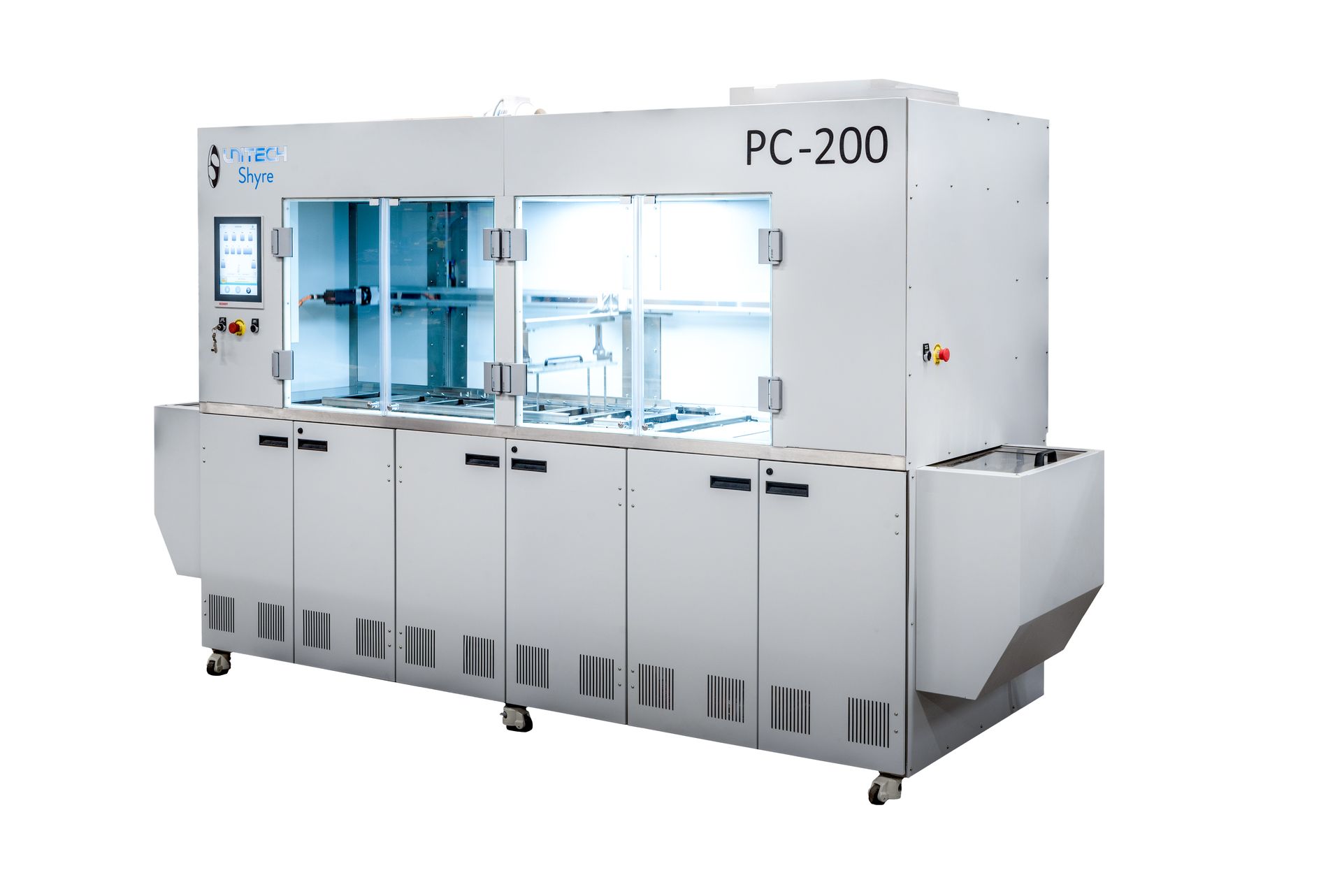
Precision optics. Mineral lenses, prisms, windows, filters and mirror blanks after grinding and polishing, where cerium oxide, alumina, pitch and polishing residues have to be removed without marking the surface.
Ophthalmic. Lens cleaning ahead of hard coating and anti-reflective coating, lens stripping and rework, and cleaning of carriers, clips and tooling.
Semiconductor. Wafers, carriers, chucks, quartzware and process tooling, where particle counts and residue limits are set by the process that follows.
Medical and orthopaedic. Implants, surgical instruments and machined components cleaned ahead of inspection, passivation or packing, with validation documentation where your sector requires it.
Automotive and precision mechanical. Machined and formed components carrying cutting oils, coolant and swarf, cleaned to residual particle requirements such as VDA 19 and ISO 16232.
Electronics. Assemblies and precision components requiring controlled removal of process residues without damage to the parts beneath.
Crown and flint glass, borosilicate, fused silica and quartz, sapphire, silicon, germanium, zinc sulphide, calcium and magnesium fluorides, high and low index ophthalmic lenses, stainless steel, titanium, aluminium, brass and bronze, engineering plastics, and coated and lacquered surfaces.
If your substrate is not on that list, ask. It is likely we have cleaned something close to it.
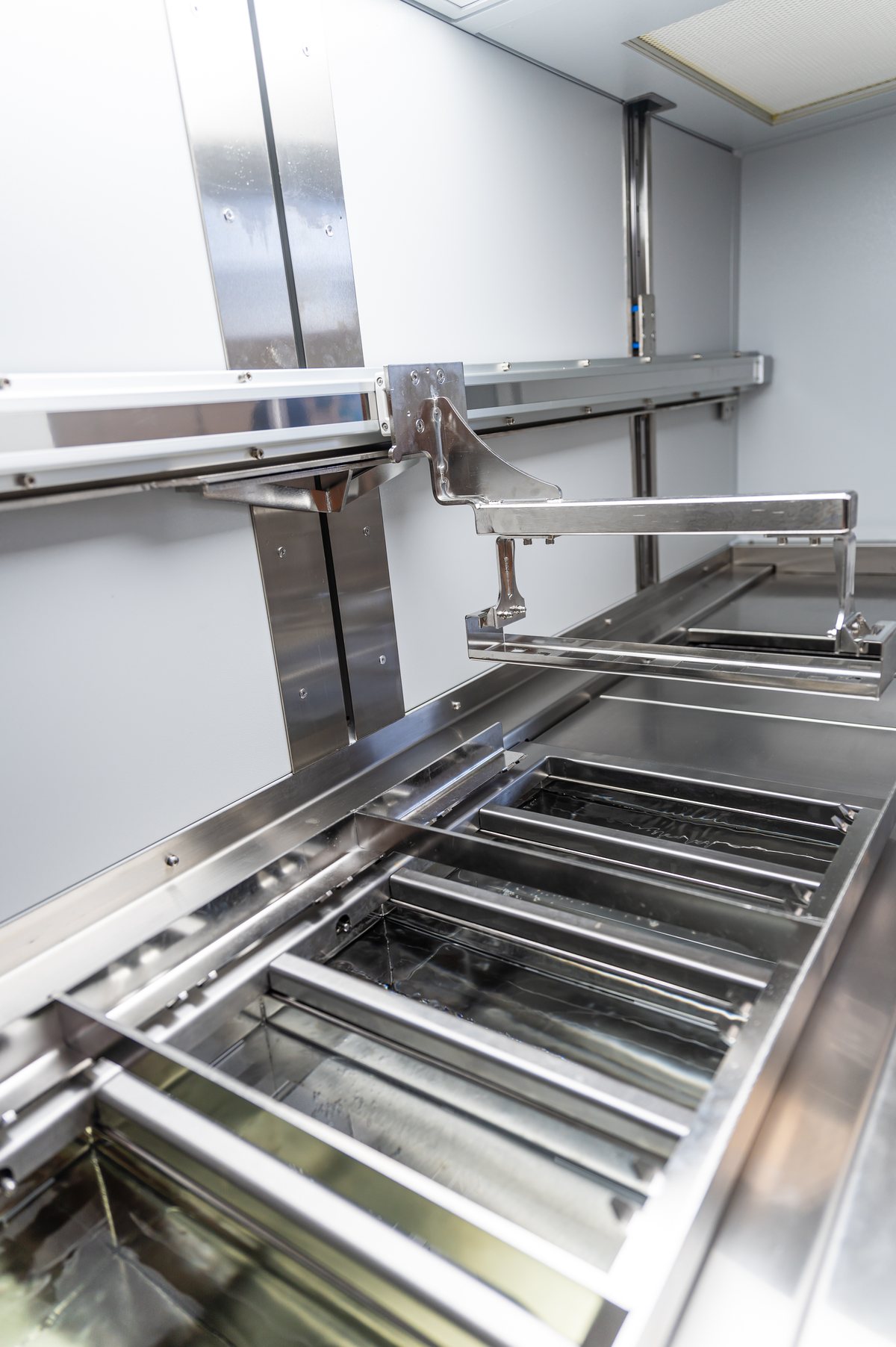
We work across mildly alkaline, highly alkaline, neutral and acidic aqueous chemistries, solvent processes and hybrid processes, in immersion, spray and ultrasonic applications.
The right answer depends on the part, the contamination and what happens to the part next. We are not tied to one route, so the recommendation follows the application rather than a catalogue. Our precision cleaning systems and our process development work are built around the same principle.
If you already have a cleaning process and it is not performing, we can help, whether or not the equipment is ours.
Typical problems brought to us include parts failing a cleanliness specification, residues appearing after a change of chemistry or water supply, bath life falling away, staining or attack on the substrate, inconsistent results between shifts or between machines, rising consumable cost, and a downstream coating or bonding step failing for reasons that turn out to originate in the clean.
We offer consultation and advisory services on their own, separate from any equipment or chemical supply. That can be a review of an existing process, a diagnostic visit, an analysis of a failure, or support in specifying a new process before you go to market. Our engineers also work alongside your team to improve or replace a process you already run.
Two questions get us started: what is the part, and what is going wrong. Send us a sample and we shall tell you what the process should be. If you would prefer to talk it through first, ask for a process consultation and we shall arrange one. You can also see our coating materials or make a general enquiry.
We use cookies to measure site and ads performance. Privacy Policy.